What does the Bible say about adding to it or removing from it?
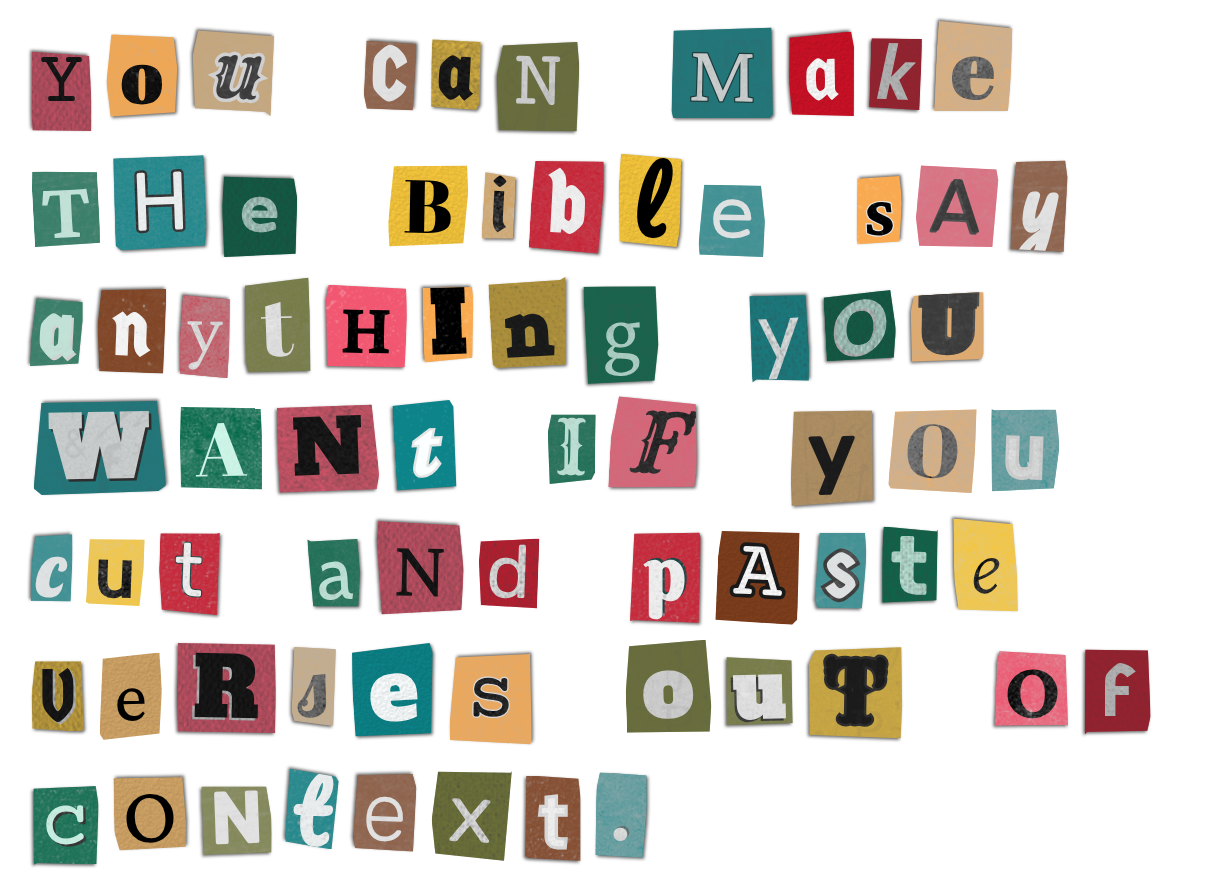
The Scriptures were never meant to be used the way a serial killer uses a magazine.
If you take God’s Word and cut out the verses you don’t like, or paste together only the ones that affirm what you already believe, you can make the Bible say almost anything. That is ransom-note theology—taking God’s holy Word, slicing it into fragments, and rearranging it until it serves your desires instead of transforming your heart.
But the Scriptures were not given to be reshaped by man. They were given to reshape man. The purpose of God’s Word is not that we would edit it to fit our lives, but that we would let it edit our character to fit His standard of righteousness.
The Word of the Living God
The Bible is not a collection of religious ideas—it is the Word of the living God. Its statutes and standards are not arbitrary, but holy communications that flow from the very mind of God. These words are an outward expression of who He is.
It is by His Word that He makes Himself known, and to change His Word is to change Him—to sculpt a god who is more lovable, more tolerable, and less demanding of holiness. But rather than remaking Him into our image, we are called to learn His love and rise to the occasion, allowing His Word to remake us into His image.
The Word of God is timeless, not temporary. It carries eternal value, just as eternal as the One who spoke it. It does not expire, and it is not done away with. It should shape us the way water shapes a stone—patiently, powerfully, and with purpose.
Let us not rip it from its context and create something new in its place, but conform to it, submit to it, and draw near to its Author, the living God Himself.
We Cut and Add From Ourselves — Not From the Word
When we read the Torah, the Prophets, and the words of Messiah, the call is always to conform our lives to His instruction. The temptation, however, has always been the opposite: to conform His instruction to our lives. We remove the commands that challenge our comfort and add justifications for the sins we want to keep.
But God’s Word needs no revision. It is already perfect. It is we who must be cut, refined, and shaped by it.
“For the word of God is living and active, sharper than any two-edged sword, piercing to the division of soul and of spirit, of joints and of marrow, and discerning the thoughts and intentions of the heart.”
Hebrews 4:12, ESV
The Word is meant to pierce us, not be pierced by our scissors.
Scripture’s Warning: Do Not Add or Remove
Torah warns:
“You shall not add to the word that I command you, nor take from it, that you may keep the commandments of the LORD your God that I command you.”
Deuteronomy 4:2, ESV
“Everything that I command you, you shall be careful to do. You shall not add to it or take from it.”
Deuteronomy 12:32, ESV
Wisdom literature warns:
“Every word of God proves true; he is a shield to those who take refuge in him. Do not add to his words, lest he rebuke you and you be found a liar.”
Proverbs 30:5–6, ESV
Messiah warns:
“Do not think that I have come to abolish the Law or the Prophets; I have not come to abolish them but to fulfill them. For truly, I say to you, until heaven and earth pass away, not an iota, not a dot, will pass from the Law until all is accomplished. Therefore whoever relaxes one of the least of these commandments and teaches others to do the same will be called least vin the kingdom of heaven, but whoever does them and teaches them will be called great vin the kingdom of heaven.”
Matthew 5:17-19
“But it is easier for heaven and earth to pass away than for one dot of the Law to become void.”
Luke 16:17
Apostles warn:
“Even if we or an angel from heaven should preach to you a gospel contrary to the one we preached to you, let him be accursed.”
Galatians 1:8–9
Revelation warns:
“If anyone adds to [these words], God will add to him the plagues described in this book; and if anyone takes away… God will take away his share in the tree of life.”
Revelation 22:18–19
From Moses to the Prophets, from Yeshua to John, the warning is consistent and unmistakable: Do not edit the Word of God.
The Real Work of Sanctification
When the Spirit convicts us through the Word, our task is not to modify the text—it is to modify ourselves.
We are called to repent, not revise.
To change our lives, not the line of Scripture that exposes them.
To let the Word stand over us, not beneath our editorial control.
Every believer faces this crossroads:
- Will I surrender to what is written, or will I rewrite what is written to suit me?
- Will I let the Word cut away what offends God in me, or will I cut away the words of God that offend me?
The first path leads to life. The second leads to self-worship.
Final Word
If you take God’s Word and remove what you don’t like, or add what makes you comfortable, you have not just altered Scripture—you have enthroned yourself. You have made your feelings the standard and your preferences the law.
That is the essence of ransom-note theology: taking pieces of God’s revelation, rearranging them until the message reads like a letter written by man.
But the Bible is not a source text for a ransom note we compose—it is a covenant document from a holy God. We don’t rewrite it to suit our lives; we rewrite our lives to align with it.
