Mark 7 is often quoted to claim that Jesus abolished the dietary laws of the Torah. Many modern translations even insert a parenthetical line saying:
“In saying this, Jesus declared all foods clean.”
Mark 7:19, ESV
But is that really what Yeshua (Jesus) taught?
When we read the full chapter in its context and in light of the whole Bible, the answer is unmistakable: Yeshua was not abolishing the Torah’s food laws but defending them against the man-made traditions of the Pharisees.
The Charge Against Yeshua: Breaking the Elders’ Traditions
The story opens with an accusation:
“Now when the Pharisees gathered to him… they saw that some of his disciples ate with hands that were defiled, that is, unwashed. (For the Pharisees and all the Jews do not eat unless they wash their hands properly, holding to the tradition of the elders.)”
Mark 7:1–3
This charge had nothing to do with pork or unclean animals.
The issue was ritual handwashing, a man-made commandment called a takanah.
The Torah contains no law requiring ceremonial handwashing before meals. This practice originated in the Oral Law, traditions added by religious authorities to “protect” the written commandments. Over time, these traditions gained authority equal to Scripture itself.
The Pharisees were not judging Yeshua by the Law of God; they were judging Him by the commandments of men.
The Torah Forbids Adding or Removing Commandments
Yeshua immediately exposes the hypocrisy of their charge. He quotes Isaiah:
“This people honors me with their lips, but their heart is far from me; in vain do they worship me, teaching as doctrines the commandments of men.”
Mark 7:6–7
He then tells them plainly:
“You leave the commandment of God and hold to the tradition of men.”
Mark 7:8
This was not a small mistake—it was a direct violation of the Torah itself.
God warned Israel:
“Everything that I command you, you shall be careful to do. You shall not add to it or take from it.”
Deuteronomy 12:32
By creating new religious rules and enforcing them as divine law, the Pharisees were doing exactly what God forbade. They were teaching their traditions as if they were from God, and condemning those who didn’t follow them.
Yeshua’s rebuke was not against the Torah, but against the violation of Torah. He was calling Israel back to obedience to God’s Word alone.
If Yeshua Had Changed the Law, He Would Have Broken It
Only two chapters earlier, Yeshua said:
“Do not think that I have come to abolish the Law or the Prophets; I have not come to abolish them but to fulfill them… For truly, I say to you, until heaven and earth pass away, not an iota, not a dot, will pass from the Law until all is accomplished. Therefore whoever relaxes one of the least of these commandments and teaches others to do the same will be called least in the kingdom of heaven.”
Matthew 5:17–19
If Yeshua had added to or removed from the Torah, even a single commandment, He would have violated the Torah and disqualified Himself as the sinless Messiah.
Whatever He is teaching in Mark 7, it cannot contradict His own words in Matthew 5.
He came to uphold the Torah, not undo it.
The Real Issue: Torah vs. Takanot (Traditions of Men)
The Pharisees believed that eating with unwashed hands made a person “defiled.” This was never taught in Moses’ Law.
Yeshua uses this moment to draw a sharp line between God’s commandments and man’s traditions. He shows that true defilement is not external—it comes from the heart.
“There is nothing outside a person that by going into him can defile him, but the things that come out of a person are what defile him.”
Mark 7:15
In other words, eating clean food with unwashed hands cannot defile you. The evil that flows from the heart, greed, pride, lust, deceit, and hate, is what makes a person unclean before God.
This is not a new teaching; it is straight out of the Torah.
The Torah Already Teaches Defilement from Within
The Torah consistently identifies inward sin as the source of defilement:
- Leviticus 19:17–18 — “You shall not hate your brother in your heart… You shall love your neighbor as yourself.”
- Deuteronomy 10:16 — “Circumcise therefore the foreskin of your heart.”
- Leviticus 18:24–28 — The nations were defiled by immorality and idolatry, not by physical contact with food or hands.
Yeshua was simply teaching the Torah correctly. He wasn’t discarding the dietary laws; He was exposing the hypocrisy of those who used man-made religion to appear righteous while their hearts were far from God.
Pork Was Never Food
Even if Yeshua had been speaking about diet, which He wasn’t, the argument fails because pork has never been considered food in Scripture.
Leviticus 11 and Deuteronomy 14 define what animals are food and which are not.
Pigs, shellfish, and scavengers were created for a different purpose: to clean the earth, not to feed mankind.
From a natural perspective, pigs are the world’s garbage disposals. They eat carrion, feces, and trash. They don’t sweat, which means toxins remain in their flesh. Their digestive tract is short, and they process food so rapidly that bacteria and parasites are not neutralized before the meat is formed. Trichinosis, roundworms, and viruses thrive in pork tissue.
In other words, pigs do exactly what God designed them to do, consume waste.
It’s just that God never designed us to consume them.
That’s not a doctrinal statement, or bible teaching, it’s simply observation. God is saying, “Don’t eat the earth’s garbage bins.”
The Word “Food” (βρῶμα / Brōma) Never Refers to Unclean Animals
The Greek word used here for “food” is βρῶμα (brōma), plural βρώματα (brōmata).
It appears seventeen times in the New Testament and never once refers to unclean meat.
In every literal use, it means lawful, edible food.
In every metaphorical use, it means spiritual nourishment.
According to Thayer’s Lexicon:
“That which is eaten; specifically of the clean kinds permitted by the Law.”
Even if we took the modern translation “all foods are clean,” it would mean:
“All foods that are truly food are clean,”
not
“All creatures are now food.”
The Phrase “Thus He Declared All Foods Clean” Is a Translator’s Addition
Now let’s look at the verse that causes all the confusion:
“For it does not enter his heart but his stomach, and goes out into the sewer.”
Mark 7:19
(In saying this, Jesus declared all foods clean.)
The last phrase “(In saying this, Jesus declared all foods clean.)” does not appear in the Greek manuscripts.
The Greek text reads:
“…καὶ εἰς τὸν ἀφεδρῶνα ἐκπορεύεται, καθαρίζων πάντα τὰ βρώματα.”
Literally: “…and goes out into the latrine, cleansing all foods.”
There is no subject here, no “He declared.”
The participle katharizōn (“cleansing”) describes what the digestive process does, not what Yeshua decreed.
Older translations such as the King James Version capture this accurately:
“…and goeth out into the draught, purging all meats.” (Mark 7:19, KJV)
In most Bibles today, the phrase “thus He declared” appears in parentheses or brackets, signaling that it was added by translators for interpretation, not translation.
You don’t need Greek to see that. The context makes it clear Yeshua is addressing handwashing traditions, not Torah food laws.
Parable Taught Publicly, But Explained Privately
And he called the people to him again and said to them, “Hear me, all of you, and understand: 15 There is nothing outside a person that by going into him can defile him, but the things that come out of a person are what defile him.”
Mark 7:14-15
This was a parable taught publicly to the crowd. Yeshua often spoke in parables, illustrations that concealed deeper truths from those not ready to receive them and revealed them only to His disciples later.
After dismissing the crowd, Mark tells us:
“And when he had entered the house and left the people, his disciples asked him about the parable.”
The explanation of the parable was a private teaching because even the disciples didn’t understand what He meant.
And he said to them, “Then are you also without understanding? Do you not see that whatever goes into a person from outside cannot defile him, since it enters not his heart but his stomach, and is expelled?
Mark 7-17-19
What Yeshua was describing was a biology lesson far ahead of its time. In His day, most people believed the mouth was a portal right into the soul. Yet He explained a truth that modern medicine later confirmed, that the digestive tract is technically outside the body, a channel through which food passes rather than an open channel into the heart. The digestive tract is outside the body.
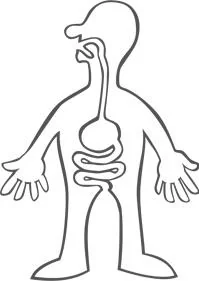
Yeshua’s point was simple and profound: what enters the stomach physically cannot defile the heart spiritually.
Yeshua goes on to explain the deeper meaning of the parable:
And he said, “What comes out of a person is what defiles him. For from within, out of the heart of man, come evil thoughts, sexual immorality, theft, mmurder, adultery, coveting, wickedness, deceit, sensuality, envy, slander, pride, foolishness. All these evil things come from within, and they defile a person.”
These “evil thoughts” like envy and pride show that Yeshua was giving a parable, and its interpretation, that spiritual defilement comes from spiritual corruption. The heart, not the stomach, is what separates a man from God.
Yeshua was not abolishing the dietary commandments. He was explaining that spiritual defilement comes from the corrupt heart of man, not from eating bread (clean food) with unwashed hands.
Breaking a dietary commandment could render a person physically and ritually unclean for a time and require separation from the camp. But sin, the evil desires and actions that flow from the heart, truly defile a person before the throne of God and can be cause for permanent separation.
Yeshua is not arguing against the dietary guidelines of the Torah or contradicting them. He is explaining a deeper teaching of the Torah regarding spiritual defilement.
We can compare this to other moments in His teaching where He conveys the same principle.
“Woe to you, scribes and Pharisees, hypocrites! For you clean the outside of the cup and the plate, but inside they are full of greed and self-indulgence. You blind Pharisee! First clean the inside of the cup and the plate, that the outside also may be clean.”
Matthew 23:25-26
Yeshua is teaching in harmony with Himself and the Torah. He constantly rebukes the Pharisees for focusing on tradition, and the physical while ignoring the spiritual. He never tells them to abandon the true physical commandments; rather, He instructs them to keep both, maintaining the physical while prioritizing the spiritual.
“Woe to you, scribes and Pharisees, hypocrites! For you are like whitewashed tombs, which outwardly appear beautiful, but within are full of dead people’s bones and all uncleanness. So you also outwardly appear righteous to others, but within you are full of hypocrisy and lawlessness.”
Matthew 23:27-28
Yeshua is condemning lawlessness, not advocating for it. He is not loosening the dietary commands; He is calling His people to be clean both spiritually and physically—with the spiritual as the higher priority and truest form of cleanness.
And this is not a “New Testament idea.” It is the original teaching of the Torah itself. Yeshua is simply interpreting the Torah perfectly, showing His disciples the deeper spiritual application they didn’t’ fully understand.
Yeshua isn’t annulling the Torah’s dietary instructions; He’s interpreting the Torah’s higher principle, that outward obedience means nothing without inward holiness. He is interpreting the Law as the Prophet like Moses, just as He said in Matthew 5:17–19: He did not come to abolish the Torah, but to fulfill it. He is correctly interpreting and teaching its fullest meanings.
Is This a Clear Example of Jesus Doing Away with the Dietary Laws of the Torah?
Modern Christianity often claims that Mark 7 is the clearest and strongest example of Jesus abolishing the dietary restrictions of the Torah.
They argue that He “declared all foods clean,” meaning all unclean animals are now clean and acceptable for consumption. They also state emphatically that the teaching is the strongest and clearest example of Yeshua removing dietary restrictions of the Torah.
But let’s slow down and examine the text honestly.
“And when he had entered the house and left the people, his disciples asked him about the parable. And he said to them, “Then are you also without understanding? Do you not see that whatever goes into a person from outside cannot defile him, since it enters not his heart but his stomach, and is expelled?”
Mark 7:17-19
This alone should make us pause.
Mark 7-17-19
The passage itself tells us that the disciples did not understand what Yeshua meant and had to ask Him privately to explain:
If this were truly the moment when Yeshua abolished one of the clearest commandments in God’s Law, something that had defined Israel’s holiness for over a thousand years, wouldn’t His disciples have recognized it?
Wouldn’t they have recorded it with absolute clarity?
Instead, the text says it was a parable, and His own disciples, men who spoke the same language, lived in the same culture, and obeyed the same Torah as Yeshua, didn’t understand it.
So we have to ask: if those who walked with Him daily and heard the teaching firsthand didn’t realize He was changing the Torah, how can anyone today call this the “clearest example” of Jesus doing so?
The claim collapses under its own weight.
Yeshua’s teaching was not a new decree about diet, it was a parable about defilement and the heart. And if it was unclear to those closest to Him, it certainly cannot be presented as clear proof of something as monumental as overturning God’s commandments.
The Timeline: From Genesis to Revelation
Does God care what we eat? Scripture answers with a resounding yes, from beginning to end.
Genesis 2:16–17
The first sin was a food sin. God’s command about which fruit not to eat was simple, but it revealed obedience of the heart.
Genesis 7:2
In Noah’s day, long before Israel, God distinguishes between clean and unclean animals:
“Take with you seven pairs of every clean animal… and a pair of the animals that are not clean.”
This proves the clean/unclean distinction existed before Sinai, before Moses, and before Israel as a nation.
Isaiah 66:15–17
The prophets confirm the same standard for the end times:
“Those who sanctify and purify themselves… eating pig’s flesh and the abomination and the mouse, shall come to an end together, declares the Lord.”
That’s future prophecy, showing the distinction still matters when Messiah returns.
Acts 10:14–28
Ten years after Mark 7, Peter, who was there when Jesus supposedly declared all foods clean, still says:
“By no means, Lord; for I have never eaten anything common or unclean.”
And when God gives him the vision of unclean animals, Peter interprets it not as food law, but as a metaphor:
“God has shown me that I should not call any person common or unclean.”
Revelation 18:2
In John’s vision of the end, he still refers to “every unclean bird.”
If unclean distinctions were abolished, Revelation would not use that language.
From Genesis to Revelation, clean and unclean remain constant.
If Jesus Were Changing the Food Laws…
Let’s just imagine for a moment, and that’s a very big if, that Jesus really intended to change the food laws of the Torah. If He were going to do that, how would He do it?
Would He do it in a parable, a riddle that even His own disciples couldn’t understand?
Would He do it privately, in a small room after the crowds had left?
Would He do it as an answer to an accusation from a Pharisee?
That’s not how God gives law. Not anywhere in Scripture.
When God gives law, it’s always unambiguous, declarative, public, authoritative, prescriptive, and followed by example and case law.
When He gave the Torah, He lit Mount Sinai on fire. Thunder, lightning, smoke, and the blast of a shofar shook the mountain. Then in the hearing of all the people, He said:
If this were truly the moment Yeshua abolished God’s dietary laws, given by God himself who thundered from a flaming mountain, would He do it in a parable His own disciples couldn’t understand? In private, when answering a Pharisee’s accusation about handwashing?
Of course not. That is inconsistent with everything we know about how God reveals truth and establishes law.
When God changes law or gives new instruction, He does it in the open, unambiguously, with authority, through prophets speaking clearly, and through unmistakable acts of power, not thought acts of transgression.
He does not whisper away His commandments in riddles, meant to be deciphered or interpreted. His commandments aren’t inferred. They are explicitly stated.
So the idea that Jesus quietly overturned the Torah’s food laws in a parable misunderstood by His own followers is not only unbiblical, it’s irrational. Compared to Sinai, where the Law was delivered in blazing glory, that interpretation makes nonsense of God’s own standard of revelation.
Conclusion: He Cleansed Hearts, Not Pigs
The Pharisees accused Yeshua of breaking their takanot—the man-made traditions of the elders—but He exposed them for breaking the very Torah they claimed to defend.
He was not abolishing the Torah, He was restoring it.
He was not contradicting Torah he was interpreting it and teaching it.
The passage in Mark 7 is a parable about the heart, not a proclamation about diet.
If Yeshua were truly changing the food laws of the Torah, He would have done so publicly, plainly, and authoritatively, just as God delivered the Law at Sinai. He would not have hidden such a monumental change inside a parable that His own disciples didn’t understand.
The phrase “Thus He declared all foods clean” is a translator’s addition, not part of the inspired text, but even if it were it would not change the meaning at all.
The context, the grammar, and the entire testimony of Scripture prove that Yeshua did not make unclean animals clean.
From Genesis to Revelation, the distinction between clean and unclean remains unchanged.
Noah knew the difference when he loaded the ark.
Isaiah warned of judgment on those who eat pig’s flesh at Messiah’s return.
Peter still called unclean animals unclean ten years after walking with Jesus.
And Revelation still describes unclean birds in the end of days.
Pork has never been food.
The Torah never changed.
And the Messiah never sinned by altering God’s Word.
Yeshua was not cleansing pigs, He was cleansing people. He came to purify the heart, to strip away hypocrisy, and to restore God’s commandments to their true purpose.
He freed us from the traditions of men, not from the obedience of faith.
He cleansed the hearts of men, not the animals of the earth.
“If you love Me, keep My commandments.”
John 14:15
